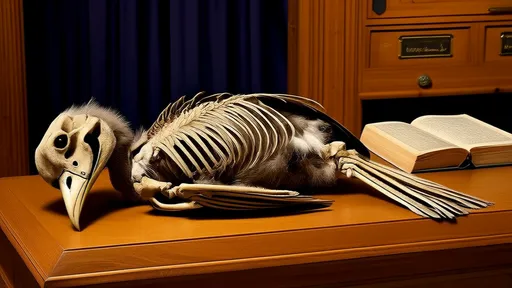
The discovery of the Oxford dodo specimen has long been a subject of fascination for scientists and historians alike. This iconic bird, which once roamed the island of Mauritius, met its tragic demise in the late 17th century due to human activity. Now, centuries later, advances in genetic technology have allowed researchers to extract and decode DNA from the remains of this very specimen, housed at the University of Oxford. The findings are shedding new light on the evolutionary history of the dodo and its place within the avian family tree.
For years, the dodo has been a symbol of extinction and human carelessness. Its flightless nature and unfamiliarity with predators made it an easy target for sailors and invasive species introduced to Mauritius. The Oxford specimen, one of the few surviving soft-tissue remains of the bird, has been a critical resource for study. Unlike skeletal remains, this specimen—a preserved head and foot—contains genetic material that has remained remarkably intact despite the passage of time. The successful extraction of DNA marks a significant milestone in paleogenomics.
The process of decoding the dodo's DNA was far from straightforward. Ancient DNA is notoriously fragile and prone to contamination, requiring meticulous laboratory techniques to prevent degradation. Researchers used cutting-edge methods to isolate and amplify genetic material from the Oxford specimen, comparing it with genomes from closely related birds, such as the Nicobar pigeon and the Rodrigues solitaire. The results have provided unprecedented insights into the dodo's evolutionary lineage, revealing surprising connections and divergences within the Columbidae family.
One of the most striking revelations from the study is the dodo's rapid evolutionary adaptations. Isolated on Mauritius with no natural predators, the bird underwent significant anatomical changes, including the loss of flight and the development of a robust, ground-dwelling physique. The DNA analysis supports the theory that these adaptations occurred over a relatively short evolutionary timespan. This rapid specialization may have also contributed to the dodo's vulnerability when humans and other invasive species arrived on the island.
The implications of this research extend beyond the dodo itself. By reconstructing its genome, scientists can better understand the broader patterns of island evolution and extinction. Island species often develop unique traits due to isolation, making them particularly susceptible to environmental changes and human interference. The dodo’s genetic story serves as a cautionary tale for modern conservation efforts, highlighting the fragility of endemic species in the face of habitat destruction and introduced predators.
Another intriguing aspect of the study is the potential for de-extinction. While the idea of resurrecting the dodo remains speculative, the successful sequencing of its DNA opens the door for further exploration into genetic engineering and species revival. Some scientists argue that the dodo’s genome could be used to guide conservation strategies for its living relatives, offering a blueprint for restoring lost genetic diversity. However, ethical and ecological concerns about de-extinction continue to spark debate within the scientific community.
The Oxford dodo specimen has also reignited discussions about museum collections and their role in modern science. Many historical specimens, once considered mere curiosities, are now invaluable resources for genetic research. The careful preservation of biological material—even in an era before DNA was understood—has allowed contemporary scientists to unlock secrets that were previously unimaginable. This underscores the importance of maintaining and studying museum archives, as they may hold the key to answering future scientific questions.
Public interest in the dodo has surged following the DNA breakthrough. Museums and educational institutions are capitalizing on this renewed fascination by featuring exhibitions and lectures on the bird’s history and extinction. The dodo’s story resonates deeply in an age of increasing biodiversity loss, serving as a poignant reminder of humanity’s impact on the natural world. By studying the past, researchers hope to inspire more proactive measures to protect endangered species today.
Looking ahead, scientists plan to expand their genetic investigations to other extinct species using similar techniques. The success with the Oxford dodo specimen provides a roadmap for future studies, offering hope that other long-lost creatures may yet reveal their secrets. As technology continues to advance, the boundaries of paleogenomics will likely expand, bringing us closer to understanding the full scope of life’s evolutionary history—one extinct species at a time.

By /Aug 12, 2025
By /Aug 12, 2025

By /Aug 12, 2025

By /Aug 12, 2025

By /Aug 12, 2025

By /Aug 12, 2025
By /Aug 12, 2025

By /Aug 12, 2025

By /Aug 12, 2025
By /Aug 12, 2025

By /Aug 12, 2025
By /Aug 12, 2025
By /Aug 12, 2025
By /Aug 12, 2025

By /Aug 12, 2025

By /Aug 12, 2025

By /Aug 12, 2025

By /Aug 12, 2025

By /Aug 12, 2025
By /Aug 12, 2025