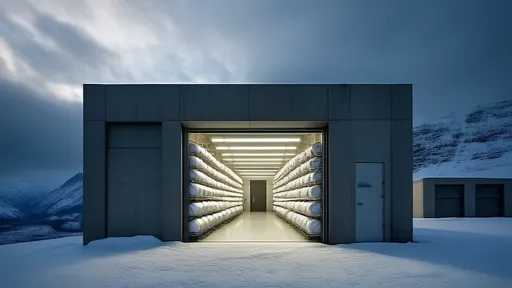
Deep in the frozen Arctic, buried within the side of a remote mountain on the Norwegian island of Spitsbergen, lies a vault designed to safeguard humanity’s agricultural future. Known as the Svalbard Global Seed Vault, this facility has been dubbed the "Doomsday Vault" for its mission to preserve the world’s crop diversity in the face of potential global catastrophes. Housing over 1.3 million seed samples from nearly every country, it stands as a modern-day Noah’s Ark for crops, ensuring that even in the worst-case scenarios, the foundation of our food supply remains intact.
The idea of a global seed vault was conceived as a response to the growing threats facing agricultural biodiversity. Climate change, natural disasters, wars, and even simple mismanagement of gene banks have all contributed to the loss of vital crop varieties. The Svalbard Vault, opened in 2008, serves as a fail-safe backup—a last resort if regional seed banks are compromised. Its location was chosen for its natural freezing temperatures and geological stability, providing an ideal environment for long-term seed preservation. The permafrost ensures that even if power fails, the seeds will remain frozen, protected by the Arctic’s harsh climate.
Inside the vault, seeds are stored in specially designed three-ply foil packages, sealed to keep moisture out. These packages are then placed in black boxes and stacked on shelves within the heavily secured underground chambers. The collection includes staples like wheat, rice, and maize, as well as lesser-known crops crucial for regional food security. Each sample represents a unique genetic blueprint, a potential solution to future agricultural challenges such as disease outbreaks or shifting growing conditions. The vault’s importance was underscored in 2015 when it facilitated its first-ever withdrawal—seeds requested by researchers in Syria to rebuild a damaged gene bank in Aleppo.
Despite its remote location, the Svalbard Vault is a collaborative effort involving governments, scientists, and indigenous communities worldwide. Countries deposit their seeds freely, retaining ownership and the right to withdraw them when needed. This spirit of global cooperation is central to the vault’s mission, reflecting a shared understanding that food security is not a national issue but a human one. The vault’s managers, the Norwegian government, the Crop Trust, and the Nordic Genetic Resource Center, emphasize that the seeds are not just for emergencies—they are a living library, a resource for developing more resilient crops to feed future generations.
Yet, the vault is not without its vulnerabilities. In 2016, unexpected melting of permafrost caused water to seep into the entrance tunnel, raising concerns about the facility’s resilience to climate change. While no seeds were damaged, the incident prompted upgrades, including improved waterproofing and drainage systems. Critics argue that the vault, while symbolically powerful, is only part of the solution. Protecting agricultural diversity also requires active conservation efforts, such as maintaining seed banks in diverse climates and supporting farmers who cultivate traditional crop varieties.
The Svalbard Global Seed Vault remains a testament to human foresight, a tangible effort to hedge against an uncertain future. As climate change accelerates and global food systems face unprecedented stress, the vault’s role becomes ever more critical. It is a silent guardian, holding within its icy walls the potential to regenerate agriculture should disaster strike. For now, the seeds wait, frozen in time, a promise that no matter what happens, life—and the crops that sustain it—will endure.

By /Aug 12, 2025
By /Aug 12, 2025
By /Aug 12, 2025
By /Aug 12, 2025

By /Aug 12, 2025

By /Aug 12, 2025
By /Aug 12, 2025

By /Aug 12, 2025
By /Aug 12, 2025
By /Aug 12, 2025
By /Aug 12, 2025
By /Aug 12, 2025
By /Aug 12, 2025
By /Aug 12, 2025
By /Aug 12, 2025
By /Aug 12, 2025

By /Aug 12, 2025

By /Aug 12, 2025
By /Aug 12, 2025
By /Aug 12, 2025