The towering figure of Moby Dick looms large not just in American literature, but as an enduring ecological parable for the industrial age. Melville’s 1851 masterpiece, often misread as a simple adventure tale, pulses with a darker, prophetic undercurrent—one that frames the white whale as both a living force of nature and an avenging symbol of ecological retribution. In an era of unchecked whaling and industrial expansion, Melville’s whale becomes the first great antihero of environmental fiction, a creature whose very existence indicts humanity’s rapacious relationship with the natural world.
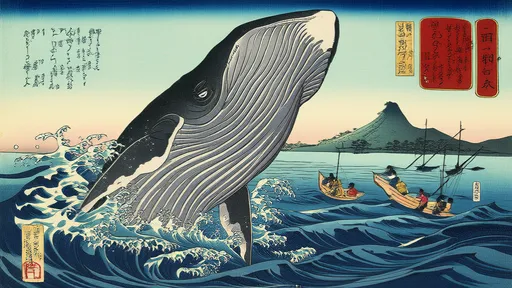
At the heart of this reading lies the Pequod, a floating microcosm of industrial exploitation. Melville meticulously details the ship’s mechanized slaughter—the try-works boiling blubber into oil, the decks slick with blood—transforming what was then standard commercial practice into something grotesquely ceremonial. The crew’s systematic dismemberment of whales mirrors the 19th century’s broader extractive logic: nature as inert resource, something to be rendered into commodities. Yet Melville subverts this worldview through the whale itself, imbuing Moby Dick with an eerie, almost supernatural agency that resists reduction.
Modern scholars increasingly recognize how Melville anticipated the ecological crises of late capitalism. The white whale’s infamous whiteness—that "colorless all-color"—reads today less as a biblical symbol than as a blank screen for humanity’s projected fears. Like climate change or ocean acidification in our time, Moby Dick represents nature’s capacity to reflect back the violence done to it. When the whale finally rams the Pequod, dragging Ahab and his crew into the abyss, the moment feels less like tragedy than ecological comeuppance: a world pushed past its limits, striking back against its exploiters.
What makes Moby-Dick uniquely prescient is its rejection of anthropocentrism. Unlike later environmental literature that positions humans as stewards or redeemers, Melville’s universe remains stubbornly indifferent to human narratives. The famous chapter "The Whiteness of the Whale" dwells not on what the whale means for people, but on its terrifying otherness—an existence entirely separate from human comprehension or control. This ecological humility feels radical even today, challenging the persistent notion that nature exists primarily in relation to human needs.
The novel’s maritime setting amplifies its ecological warnings. Melville understood oceans as the planet’s circulatory system long before modern marine science—the whaling industry’s disruption of cetacean populations foreshadowing our current age of collapsing fisheries and coral bleaching. His detailed accounts of whale behavior (drawn from years at sea) ground the story in biological reality even as the white whale ascends to mythic status. This duality—specific natural history married to cosmic symbolism—makes Moby Dick’s environmental message both immediate and timeless.
Contemporary readers can’t help but see climate change’s looming disasters in Ahab’s monomaniacal pursuit. The captain’s refusal to abandon his quest despite all warnings mirrors our collective failure to curb fossil fuel dependence. Like the Pequod’s crew—complicit through silence or willful ignorance—modern societies rationalize environmental destruction as inevitable progress. Melville’s genius lay in recognizing this pathology decades before petrochemical capitalism accelerated it: the suicidal impulse of civilizations that mistake domination for destiny.
Yet the novel resists simplistic eco-allegory. Moby Dick isn’t nature "fighting back" in some Disneyfied sense, but rather the inevitable consequence of systems pushed out of balance. The whale’s violence emerges reactively, only after sustained predation—a dynamic chillingly familiar in an age of zoonotic pandemics and climate refugees. Melville’s vision transcends simple revenge narrative to expose the deeper tragedy: that industrial civilization, like Ahab, can imagine no relationship with nature except through mastery or annihilation.
Perhaps most remarkably, Melville wrote this ecological warning at the dawn of the petroleum age. Published just eight years before Drake’s first oil well, the novel unknowingly documents the last moments when whale oil still powered industrial expansion. The Pequod’s try-works, with their "infernal" glow and choking smoke, become an unwitting premonition of oil refineries—another finite resource whose extraction would bring unforeseen consequences. In this light, Moby Dick stands as literature’s first great fossil fuel parable.
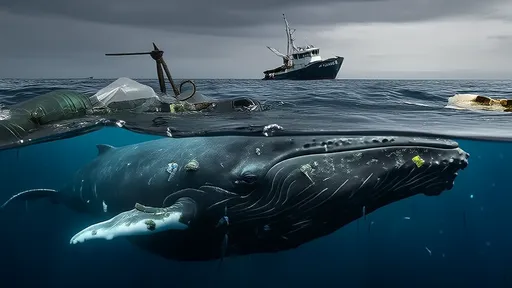
The book’s environmental dimensions were largely ignored until the 1970s, when the modern ecological movement began recognizing its prescience. Today, as microplastics choke marine life and CO2 levels hit record highs, Melville’s vision feels less like fiction than reportage. The novel’s famous opening line—"Call me Ishmael"—takes on new resonance: like the sole survivor of ecological catastrophe, Ishmael floats atop the wreckage, left to bear witness to what happens when civilizations mistake nature for an enemy to be conquered.
What ultimately makes Moby-Dick endure as environmental literature isn’t its warnings alone, but its profound ambiguity. Melville refuses to romanticize nature (the whale is neither noble nor malicious) or offer easy solutions. Instead, he forces readers to sit with uncomfortable truths about complicity and consequence. In our current moment of climate anxiety and greenwashing, this unflinching honesty may be the novel’s greatest ecological gift—a reminder that the natural world operates by its own logic, indifferent to human narratives of progress or redemption.

By /Aug 12, 2025
By /Aug 12, 2025
By /Aug 12, 2025
By /Aug 12, 2025

By /Aug 12, 2025

By /Aug 12, 2025
By /Aug 12, 2025

By /Aug 12, 2025

By /Aug 12, 2025
By /Aug 12, 2025

By /Aug 12, 2025
By /Aug 12, 2025
By /Aug 12, 2025
By /Aug 12, 2025
By /Aug 12, 2025

By /Aug 12, 2025

By /Aug 12, 2025

By /Aug 12, 2025
By /Aug 12, 2025
By /Aug 12, 2025