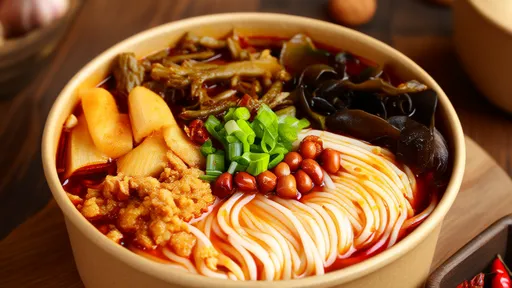
The pungent aroma of Liuzhou river snail rice noodles – a dish that has captivated taste buds across China and beyond – owes much of its signature funk to a humble ingredient: fermented bamboo shoots. Known locally as "suan sun," these lacto-fermented shoots undergo a fascinating seven-day transformation that creates the dish's unmistakable sour backbone. In the backstreets of Liuzhou, Guangxi, generations of artisans have perfected this alchemical process, turning crisp bamboo into soft, golden strands bursting with umami.
Walking into a traditional fermentation workshop assaults the senses in the best possible way. The air hangs thick with the sharp, nose-wrinkling scent of active fermentation – equal parts vinegar, earth, and something indescribably alive. Master fermenters still use century-old earthenware jars taller than a child, their porous walls hosting complex microbial ecosystems passed down like heirlooms. "The jars remember," says Huang Weijie, a third-generation suan sun producer. "Each batch whispers to the next through the bacteria clinging to the clay."
The magic begins with winter bamboo shoots harvested at peak freshness, their ivory flesh crisp and slightly sweet. Workers hand-shred them into uniform strips before packing them tightly into fermentation vessels with nothing but mountain spring water and salt. What happens next is a microbial ballet where lactic acid bacteria outcompete harmful pathogens, creating an environment where flavors deepen and transform daily.
By day three, the shoots begin their metamorphosis. The brine clouds as starches break down, while the pH drops sharply. This is when experienced fermenters start judging progress by sound – listening for the faint fizz of carbon dioxide bubbles rising through the brine. The aroma evolves from vegetal freshness to something sharper, with notes of overripe fruit and wet stone emerging.
The fifth day marks a turning point. Lactobacillus populations peak, converting sugars into lactic acid at a furious pace. The shoots soften noticeably, their cell walls breaking down to create that perfect tender-yet-crunchy texture Liuzhou locals prize. A complex sourness develops, layered with subtle funky undertones that food scientists attribute to volatile sulfur compounds and esters.
At the seven-day mark – the sweet spot for most Liuzhou noodle shops – the suan sun achieves perfect harmony. The acidity remains bright but no longer harsh, balanced by deep savory notes reminiscent of aged cheese or dry-cured sausage. This is when master fermenters make their move, either halting fermentation through pasteurization or allowing it to continue for specialty products. The resulting product varies batch to batch, carrying the microbial signature of its specific fermentation environment.
Modern food science has only begun unraveling why this week-long process creates such addictive flavors. Chromatography studies reveal over 120 volatile organic compounds in properly fermented suan sun, including several found in fine wines and aged meats. Yet local producers rely on sensory cues passed down through generations – the way the brine catches light, the particular stickiness between fingers, the symphony of sour notes that should "taste like a Liuzhou summer afternoon."
As Liuzhou luosifen conquers global palates, its funky soul remains rooted in these earthenware jars. Industrial producers have attempted shortcuts – artificial acids, accelerated fermentation, even flavor additives – but connoisseurs can spot the imposters instantly. True suan sun carries the terroir of its making, a living testament to microbial magic that no laboratory can replicate. In an age of instant gratification, these seven days of patient fermentation stand as a delicious rebellion.
The next time you inhale that first pungent whiff of authentic Liuzhou river snail rice noodles, remember: you're not just smelling bamboo shoots. You're breathing in a week's worth of microbial labor, a complex perfume crafted by invisible hands, the very essence of a culinary tradition that turns patience into pleasure.
By /Aug 11, 2025
By /Aug 11, 2025
By /Aug 11, 2025
By /Aug 11, 2025
By /Aug 11, 2025
By /Aug 11, 2025
By /Aug 11, 2025
By /Aug 11, 2025
By /Aug 11, 2025
By /Aug 11, 2025

By /Aug 11, 2025
By /Aug 11, 2025
By /Aug 11, 2025
By /Aug 11, 2025

By /Aug 11, 2025
By /Aug 11, 2025

By /Aug 11, 2025

By /Aug 11, 2025
By /Aug 11, 2025

By /Aug 11, 2025