The art of making Shandong-style pancakes, known locally as "jianbing," hinges on a delicate balance of ingredients and technique. At the heart of this culinary tradition lies a seemingly simple yet crucial element: the hydration ratio of the batter. For generations, cooks in Shandong Province have guarded their recipes closely, passing down the secrets of the perfect batter from one generation to the next. The golden ratio of water to flour isn't just a matter of preference—it's the foundation upon which texture, flexibility, and flavor are built.
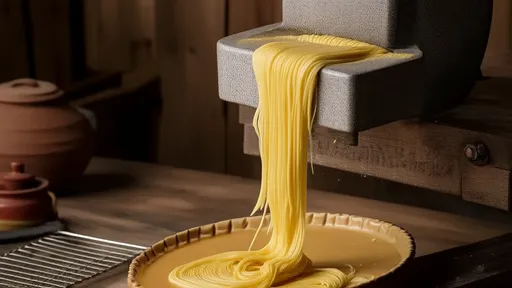
Unlike Western pancakes, which often rely on thick batters, Shandong jianbing demands a thin, almost crepe-like consistency. This allows the pancake to achieve its signature crisp edges while remaining pliable enough to fold around fillings. The ideal hydration level typically falls between 65% and 70% water by weight relative to the flour. This range creates a batter that flows smoothly across the griddle without becoming watery or losing its structural integrity. When the ratio strays too far in either direction, the results speak for themselves—either a brittle, cracker-like texture or a gummy, undercooked center.
The science behind this golden ratio reveals why it works so well. At approximately 67% hydration, the gluten network develops sufficiently to provide strength without making the pancake tough. This percentage allows the starch granules to swell adequately during cooking, creating that desirable slight chewiness. Professional jianbing makers can often tell if the batter is right just by listening to the sound it makes when poured—a proper consistency produces a distinctive hiss as it hits the hot cooking surface.
Seasoned vendors in Shandong's bustling morning markets demonstrate an almost intuitive understanding of how environmental factors affect their batter. On humid summer days, they might reduce the water content slightly to compensate for moisture in the air. During dry winter months, the opposite adjustment helps maintain the perfect flow. This responsiveness to conditions highlights the living nature of the golden ratio—it serves as a guideline rather than an inflexible rule, adaptable to circumstances while staying true to core principles.
Regional variations within Shandong itself showcase how the golden ratio accommodates different preferences. Coastal cities like Qingdao might incorporate a touch more water to create slightly thinner pancakes that complement seafood fillings. Inland areas near Jinan often prefer a marginally thicker batter that stands up better to heartier ingredients like braised meats. Yet all these variations orbit around that central 65-70% hydration range, proving its fundamental importance across diverse applications.
The preparation method further refines how the golden ratio manifests in the final product. Traditionalists insist on mixing the batter by hand in a specific circular motion that develops just enough gluten without overworking the mixture. The resting period—usually 30 minutes to an hour—allows the flour to fully hydrate and the gluten to relax. Rushing this process often leads to inconsistent textures, no matter how precisely one measures the water and flour. This combination of precise measurement and patient technique transforms simple ingredients into something extraordinary.
Modern food science has begun quantifying what generations of Shandong cooks knew through experience. Laboratory analysis shows that at the golden ratio's hydration level, heat transfers evenly through the pancake during cooking. The water content is sufficient to create steam that lifts the batter slightly, producing those characteristic tiny bubbles that crisp up beautifully. Simultaneously, enough moisture remains to prevent the pancake from drying out before it reaches the table. This balance explains why street vendors can stack cooked jianbing without them sticking together or becoming soggy.
Beyond texture, the hydration ratio profoundly influences how the pancake interacts with sauces and fillings. A properly hydrated jianbing absorbs just enough of the flavorful sauces—typically a fermented bean paste or chili oil—without disintegrating. The slight porosity created by the ideal water content allows flavors to penetrate while maintaining structural integrity. This becomes especially important when eating the pancake on the go, as it must hold together despite folding and handling.
Contemporary chefs experimenting with Shandong-style pancakes continue to validate the wisdom of the golden ratio. Even when incorporating alternative flours like buckwheat or whole wheat, maintaining that 65-70% hydration range produces the best results. Some modern interpretations might include small amounts of other liquids like stock or milk, but these simply replace part of the water while keeping the total liquid content within the traditional parameters. The endurance of this ratio across changing tastes and ingredients speaks to its fundamental rightness.
For home cooks attempting Shandong pancakes, achieving the golden ratio requires attention to detail. Professional kitchens weigh ingredients precisely, but household measures can work with careful adjustment. The batter should coat the back of a spoon smoothly, leaving a thin veil that disappears within seconds. If it clings too thickly, more water is needed; if it runs off immediately, additional flour will bring it into balance. This tactile approach connects modern enthusiasts with centuries of culinary tradition.
As Shandong cuisine gains international recognition, the golden ratio of jianbing batter serves as both a technical guideline and a cultural touchstone. It represents a harmony between precision and adaptability, between tradition and innovation. From busy street stalls in Qingdao to trendy fusion restaurants overseas, this fundamental principle continues to ensure that each paper-thin pancake carries the authentic taste and texture of Shandong's rich culinary heritage.
By /Aug 11, 2025
By /Aug 11, 2025
By /Aug 11, 2025
By /Aug 11, 2025
By /Aug 11, 2025
By /Aug 11, 2025
By /Aug 11, 2025
By /Aug 11, 2025
By /Aug 11, 2025
By /Aug 11, 2025

By /Aug 11, 2025
By /Aug 11, 2025
By /Aug 11, 2025
By /Aug 11, 2025

By /Aug 11, 2025
By /Aug 11, 2025

By /Aug 11, 2025
By /Aug 11, 2025
By /Aug 11, 2025

By /Aug 11, 2025